
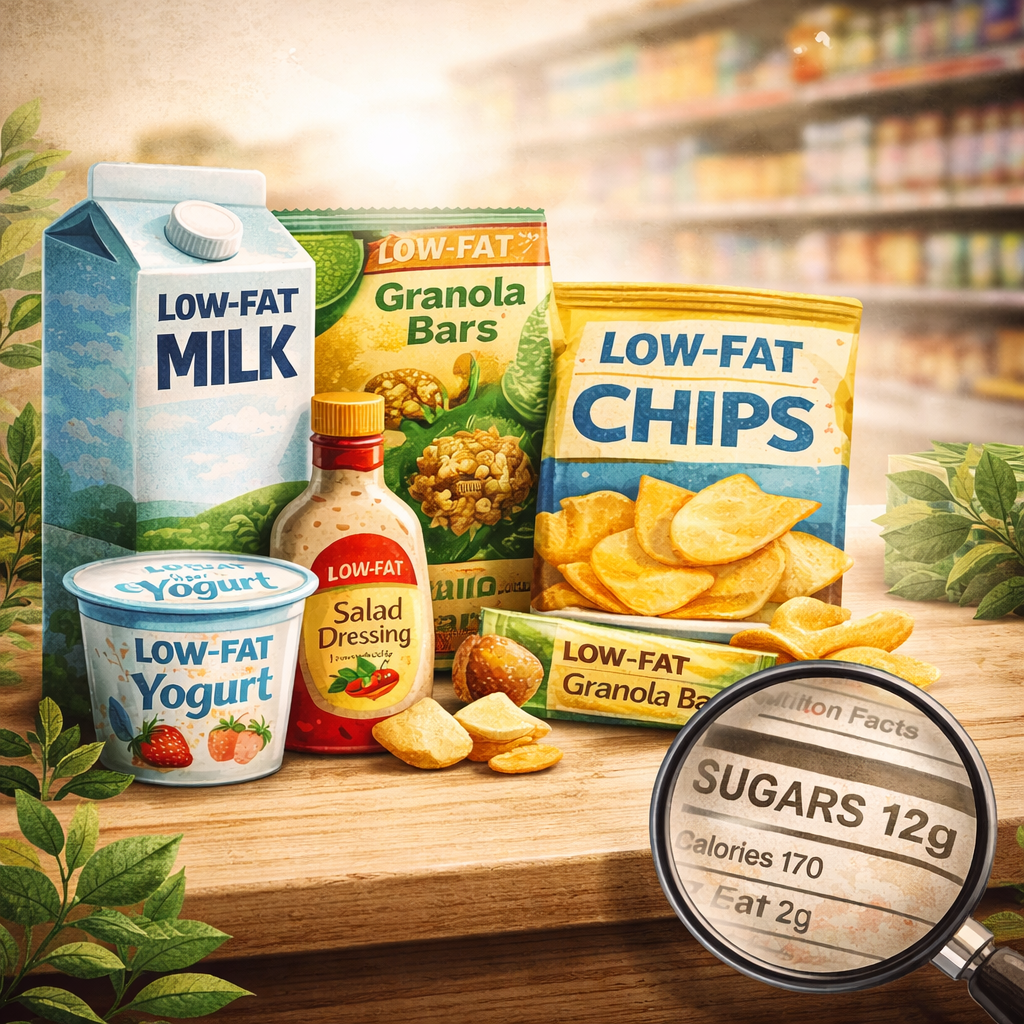
In the world of weight loss, “low-fat” foods have long been marketed as the healthier choice. From low-fat yogurt to fat-free snacks, these products promise fewer calories and better results.
Low-fat doesn’t always mean healthy — and it can actually slow down fat loss.
Let’s break down the science behind it.
What Are “Low-Fat” Foods?
Low-fat foods are processed products where natural fats are reduced or removed. To maintain taste and texture, manufacturers often add:
- Refined sugars
- Artificial flavors
- Starches and thickeners

This means you may be eating something labeled “healthy” — but metabolically, it’s doing the opposite.
Why Low-Fat Foods Can Hinder Fat Loss
1. Higher Sugar Content = More Fat Storage
When fat is removed, sugar is often added.
This leads to:
- Blood sugar spikes
- Increased insulin levels
- Higher fat storage (especially belly fat)
Learn more about insulin impact in our blog: Understanding Insulin Resistance and Weight Gain
2. Reduced Satiety → Overeating
Healthy fats help you feel full.
When you remove them:
- Hunger increases
- Cravings spike
- Portion control becomes harder
This often results in eating more calories overall, even if each product is “low-fat.”
3. Hormonal Imbalance
Fats are essential for hormone production, including:
- Leptin (satiety hormone)
- Estrogen & testosterone
- Cortisol balance
Low-fat diets can disrupt these, making fat loss more difficult.
Related read: Cortisol and Belly Fat: The Hidden Link
Nutrient Absorption Issues
Fat is required to absorb fat-soluble vitamins:
- Vitamin A
- Vitamin D
- Vitamin E
- Vitamin K
Without fat, your body cannot fully utilize these nutrients — affecting metabolism and overall health.
Scientific reference: Healthy fats and nutrient absorption insights
5. Ultra-Processed Trap

Most low-fat foods fall into the category of ultra-processed foods, which are linked to:
- Weight gain
- Poor gut health
- Increased cravings
What Should You Eat Instead?
Focus on real, whole foods with healthy fats, such as:
- Nuts & seeds
- Olive oil
- Avocado
- Curd/yogurt
- Paneer (in moderation)
These help:
- Improve satiety
- Stabilize blood sugar
- Support hormonal balance
The Right Approach to Fat Loss
Instead of “low-fat,” aim for:

- Balanced meals (protein + fiber + healthy fats)
- Minimal processed foods
- Portion awareness
- Consistency over restriction
Final Takeaway
Low-fat foods may look healthy on the label, but they often work against your fat loss goals.
The key is not to fear fat — but to choose the right kind of fat in the right amount.
Because sustainable weight loss isn’t about removing nutrients…
It’s about balance, quality, and consistency.