
Protein Deficiency: The Hidden Reason Behind Fatigue and Hair Fall is a topic that deserves far more attention than it usually gets. Many people struggle with low energy, constant tiredness, and hair fall without realising that their diet may be the real problem. Protein Deficiency: The Hidden Reason Behind Fatigue and Hair Fall is not just a catchy phrase. It reflects a very real issue that often stays hidden behind symptoms people blame on stress, age, poor sleep, or a busy routine.
What makes this problem difficult to detect is that protein deficiency does not always appear in an obvious or dramatic way. It often develops slowly. You may start feeling weak, notice more hair on your pillow or in the shower, and assume it is temporary. But when the body does not get enough protein over time, it starts affecting important functions such as tissue repair, muscle maintenance, immunity, and even hair growth.
Why Protein Is So Important for the Body
Protein is one of the most essential nutrients the body needs every day. It helps build and repair tissues, supports muscle strength, forms enzymes and hormones, and plays a major role in healthy skin, nails, and hair. In simple terms, protein gives the body the material it needs to maintain itself properly.
Hair is mostly made of a protein called keratin. That means your hair health is directly linked to whether your body is getting enough protein. When your intake is low, the body starts prioritising essential organs and survival functions. Hair growth becomes less important, and that is when increased hair fall may begin.
How Protein Deficiency Causes Fatigue
Fatigue is often one of the earliest signs of poor nutrition, and low protein intake can be a hidden reason behind it. When you are not eating enough protein, your body may struggle to maintain muscle mass, repair tissues efficiently, and support normal metabolic functions. Over time, this can leave you feeling weak, sluggish, and easily exhausted.
Many people also eat meals that are high in carbohydrates but very low in protein. These meals may fill the stomach for a short time, but they often do not provide long-lasting energy. As a result, you may feel hungry again very quickly, experience energy crashes, and continue feeling tired throughout the day.
How Protein Deficiency Contributes to Hair Fall
Hair growth follows a natural cycle. Some hairs are growing, some are resting, and some are shedding. But when the body goes through nutritional stress, this cycle can get disturbed. One of the effects of low protein intake is that more hair may enter the shedding phase than usual.
This kind of hair fall is often diffuse, which means it is spread across the scalp rather than appearing in one patch. Many people do not connect it to diet because the shedding may become noticeable weeks or even months after poor eating habits begin. That is why protein deficiency can remain a hidden cause for so long.
Common Signs of Protein Deficiency
Protein deficiency rarely shows up as just one symptom. The body usually gives several warning signs together. These signs may seem unrelated at first, but when seen as a whole, they can point to an underlying nutritional gap.
Some of the common signs include ongoing fatigue, frequent hair fall, brittle nails, muscle weakness, poor recovery after illness or exercise, frequent hunger, and unintentional weight loss. In some cases, people may also notice reduced strength, poor concentration, or a general feeling that their body is not functioning at its best.
Who Is More Likely to Develop Protein Deficiency

Protein deficiency can affect anyone, but some groups are at higher risk than others. People who follow crash diets, skip meals, or try to lose weight too quickly often end up eating far less protein than their body needs. Vegetarians and vegans can also fall short if their meals are not planned properly.
Older adults are another group at risk, especially if appetite becomes poor with age. People recovering from infection, surgery, or chronic illness may also need more protein but may not be eating enough. Busy students, working professionals, and people who rely heavily on tea, toast, biscuits, and snack-based meals may unknowingly develop low protein intake over time.
Why This Problem Is Often Overlooked
One reason protein deficiency goes unnoticed is that many low-protein diets do not look unhealthy on the surface. A person may be eating fruits, salads, oats, soups, and light meals and still not be getting enough protein. Another common issue is assuming that a very small amount of dal, one egg, or occasional paneer is enough for the whole day, when in reality it may not meet the body’s needs.
People often focus on calories, sugar, or fat while ignoring protein. But protein is not just for bodybuilders or athletes. It is a basic requirement for everyday health. If the body is not getting enough of it consistently, the effects can show up in ways that seem unrelated at first.
Protein Deficiency Is Not the Only Cause
It is important to remember that fatigue and hair fall are not caused only by protein deficiency. Iron deficiency, thyroid disorders, stress, hormonal imbalance, illness, poor sleep, and other nutrient deficiencies can also lead to similar symptoms. That is why these signs should not be ignored or self-diagnosed too quickly.
Still, protein deficiency remains one of the most commonly overlooked possibilities, especially in people whose meals are irregular, restrictive, or poorly balanced. Looking at diet carefully is often a very useful first step.
How Much Protein Do You Need
Protein needs vary from person to person, but a commonly used minimum guideline for adults is around 0.8 grams of protein per kilogram of body weight per day. For example, a person weighing 60 kilograms would need at least around 48 grams of protein daily. A person weighing 70 kilograms would need around 56 grams.
This is only a basic minimum. People who are active, older, recovering from illness, or trying to preserve muscle while losing weight may need more. The key point is that many people are eating less than they think.
Good Food Sources of Protein

The good news is that meeting your protein needs does not have to be complicated. There are many simple and affordable protein-rich foods that can be included in daily meals. Eggs, chicken, fish, milk, curd, paneer, and Greek yoghurt are good animal-based options.
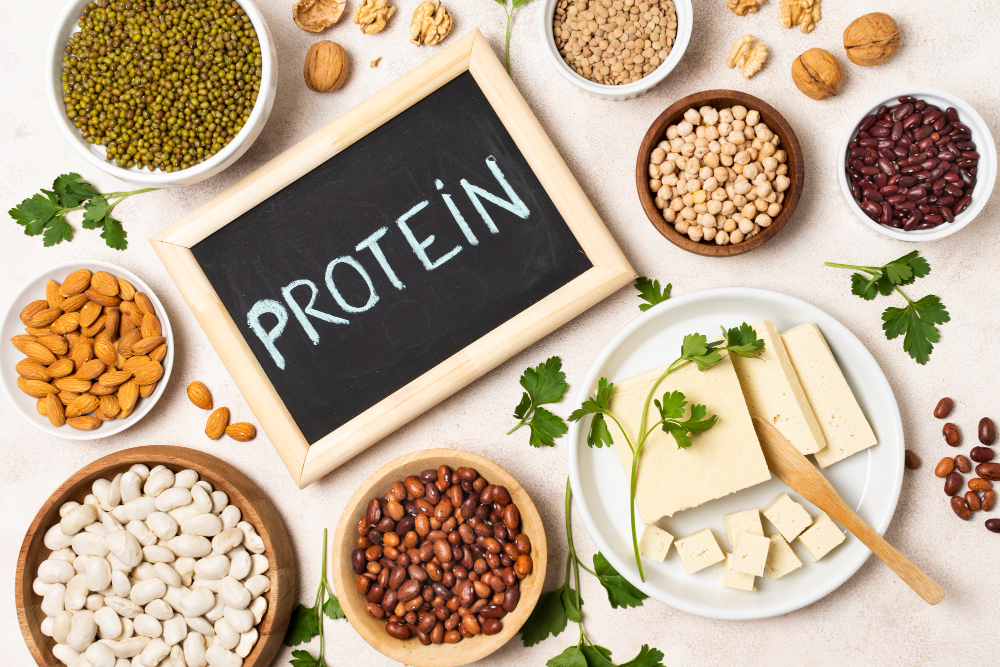
For those who prefer plant-based foods, lentils, dals, chickpeas, rajma, soybeans, tofu, nuts, seeds, and peanut butter can all contribute to better protein intake. The real goal is not to have protein once in a while. It is to include it regularly across the day.
What a Low-Protein Diet Often Looks Like
Many people with low protein intake do not realise it because their meals seem normal. A breakfast of tea and toast, a lunch of rice and vegetables, an evening snack of biscuits, and a dinner of roti and sabzi may sound routine, but such a pattern may still provide too little protein.
Now compare that with a day that includes eggs or yoghurt at breakfast, dal or chicken at lunch, roasted chana or paneer as a snack, and tofu, fish, or lentils at dinner. This second pattern supports the body much better and makes it easier to maintain energy, muscle, and hair health.
Simple Ways to Improve Protein Intake
Improving protein intake does not require a strict or expensive diet. It starts with small, consistent changes. Adding a protein source to breakfast can make a big difference. Including a proper protein item in both lunch and dinner also helps the body get a more steady supply.
Choosing better snacks is another simple step. Instead of depending only on biscuits, namkeen, or toast, you can include curd, boiled eggs, roasted chana, paneer, or nuts. These changes may seem small, but over time they help correct a hidden nutritional gap.
When You Should Seek Help
If your fatigue is persistent, your hair fall is worsening, or you also have symptoms like weight loss, weakness, poor appetite, digestive problems, or irregular periods, it is important to seek professional advice. A doctor or dietitian can help identify whether the issue is protein deficiency, another nutrient deficiency, or a medical condition that needs treatment.
Hair fall and fatigue may look like simple everyday complaints, but when they continue for a long time, they should be taken seriously. The earlier the cause is identified, the easier it becomes to manage.
Protein Deficiency: The Hidden Reason Behind Fatigue and Hair Fall is something many people overlook until the symptoms begin affecting everyday life. Low energy, poor recovery, and increased hair fall are not always random problems. Sometimes they are signs that the body has been missing an essential nutrient for too long.
The good news is that this issue can often be improved with better awareness and better food choices. When meals are more balanced and protein intake becomes more consistent, the body is better able to repair, recover, and function properly. Sometimes the hidden reason is not complicated at all. It is simply that the body has not been getting what it needs.